
The UNESCO Chair of the University of Andorra, entitled “Information technologies: Education and solidarity-based development. The case of small states”, aims primarily to help reduce the digital divide through education and the exchange of experiences. To achieve this, the Chair promotes the use of information and communication technologies (ICT) in education as a key means of fostering the wider dissemination of these technologies throughout society.
The Chair is aligned with the World Declaration on Education for All (1990) and the Dakar Framework for Action (2000), especially Goal 6 regarding the quality of education. It also participates in the United Nations DESD (Decade of Education for Sustainable Development), insofar as it plans educational initiatives in developing countries and the study of higher education models applicable to isolated regions with scattered populations, limited resources and/or communication difficulties.
The agreement establishing the Chair was signed in Paris on 20 November 2006 between the UNESCO and the University of Andorra. The Chair began its activities in September 2007 for an initial four-year period and has since been renewed consecutively. In February 2026, UNESCO announced the renewal of the University of Andorra’s UNESCO Chair until December 2029.
Degrees and trainings
The University of Andorra has taken a step forward in educational innovation, implementing in its main degrees a new educational model fully based on competences. This model places the student at the heart of education and integrates democratic culture, SDGs and multilingualism as cross-curricular elements. In the different trainings, students also develop skills related to technology, critical thinking, creativity, communication skills and socio-emotional skills. More information
In lifelong learning, the UdA offers permanent training and refresher courses designed from the very needs detected in many areas of society or that reach the university as specific demands of different sectors. This philosophy of university listening to citizens, reflects a constant effort to promote universal access to education, a value clearly linked to the UNESCO Chair. Among these trainings are postgraduate studies, face-to-face or virtual refresher courses, courses offered in free classroom mode, where anyone can take credits of official studies without having to study the entire degree. Finally, the Aula d’Estiu (translated as Summer Classroom) is a space for the improvement of all professionals, especially those in education in areas such as educational innovation, technology, sustainability and inclusion in education as well as many other areas of general culture. More information
Research
In general, all the research carried out at the University of Andorra contributes to the promotion of scientific knowledge in a wide variety of subjects. Among all the research groups, we highlight the projects of the Interdisciplinary Research Group on Education and the Language Research Group, which are closely aligned with the objectives of the UNESCO Chair, as they promote educational improvement and cultural and linguistic promotion from a multilingual approach.
Other projects
Aula Magna
A series of academic activities aimed at all those who want to be part of the university students of the country, regardless of their age. More information
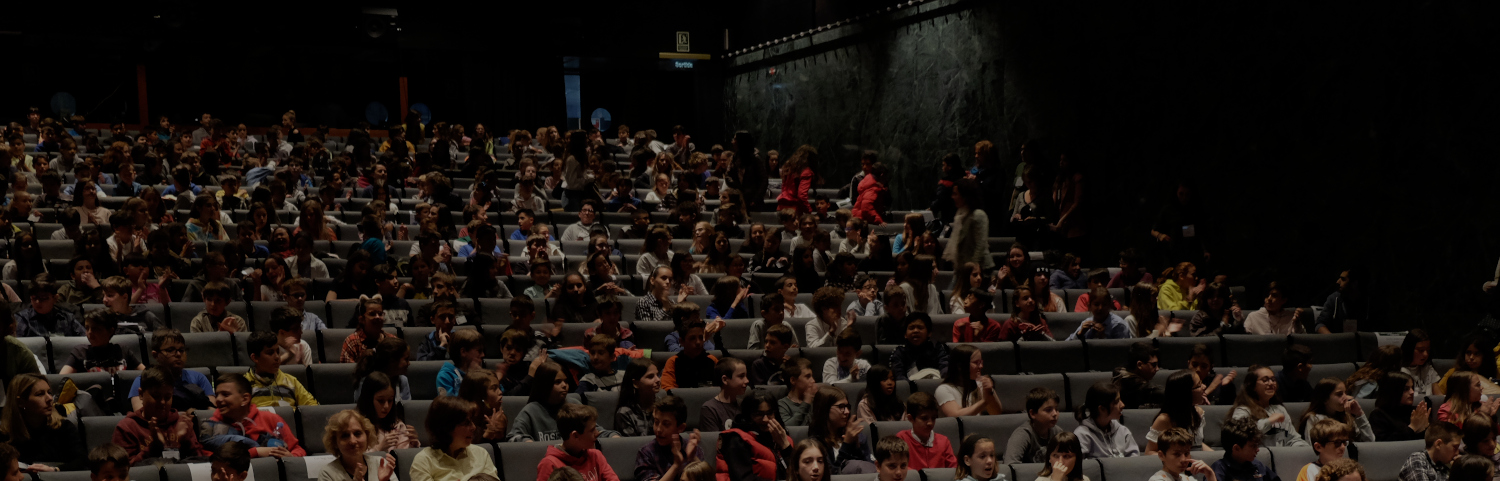
The Children’s University
University social responsibility project with the aim of promoting interest in science and stimulating scientific dissemination among children, overcoming stereotypes about scientific knowledge. More information (in Catalan)
Debate League
Public speaking competition in which several teams of students from different schools hold debates on a controversial and current topic. More information (in Catalan)
UdA Solidarity
The UdA Solidària commission of the University of Andorra works to promote the social, solidarity and cooperation function of the UdA through awareness-raising and volunteering tasks. More information (in Catalan)